
[Camino]: Trellis, Not Treadmill
When faith feels like work, and you are tired of working
A friend who’s journeying with me in this wilderness sent me a pondering message that I cannot stop thinking about, because I have lived inside it.
It was not really a message about scheduling an online group. It was a message about what happens when the old religious muscle memory rears its head again, even after you have walked away from the systems that formed it.
You know that feeling.
Following God starts to feel like work.
Reading scripture feels like work.
Prayer feels like work.
Even resting feels like work because we still carry guilt for not doing the work.
And then a shadow thought arrives, quiet but sharp:
If I stop, it will all fall apart.
The wilderness has different roads
One of the hardest parts of deconstruction is realizing that wilderness is not a single experience. It is a landscape. And we are on different roads inside it.
In my friend’s message, I hear at least four different needs in one room.
One person needs an anchor that is explicitly spiritual.
One person needs a community that leads toward justice and real-world engagement.
One person needs a space that is not tied to a job or performance.
One person needs structure; without a container, everything floats, and floating eventually fades.
None of these needs is wrong.
They are simply different roads through the same wilderness.
And if we are honest, our needs change as we move. What grounded us last year might feel heavy this year. What felt impossible a year ago might now feel like oxygen.
So the question is not, “What is the perfect format for Camino?”
The question is, “What kind of container helps people stay human while they heal, while they search, while they rebuild?”
When spirituality becomes a treadmill
Many of us were trained to relate to God through effort.
If we did the practices, we were faithful.
If we did not, we were drifting.
If we drifted, we were in danger.
That formation is deep. It does not disappear simply because we stop calling ourselves evangelical, or stop attending church, or stop agreeing with the doctrines we were handed.
So when my friend says, “It feels like work,” I believe it.
And I also want to name something gently.
Sometimes what feels like “spiritual work” is actually fear management.
Not always. But often.
We are not practicing because we are hungry.
We are practicing because we are afraid.
Afraid of losing God.
Afraid of losing ourselves.
Afraid of becoming numb.
Afraid that the thread will snap.
If that is us, I want to say this as plainly as I can.
Our faith does not survive because we keep it alive.
Our faith survives because God is alive.
And yet, that does not mean we do nothing.
Because relationships do not deepen by accident.
So we need an image other than a treadmill.
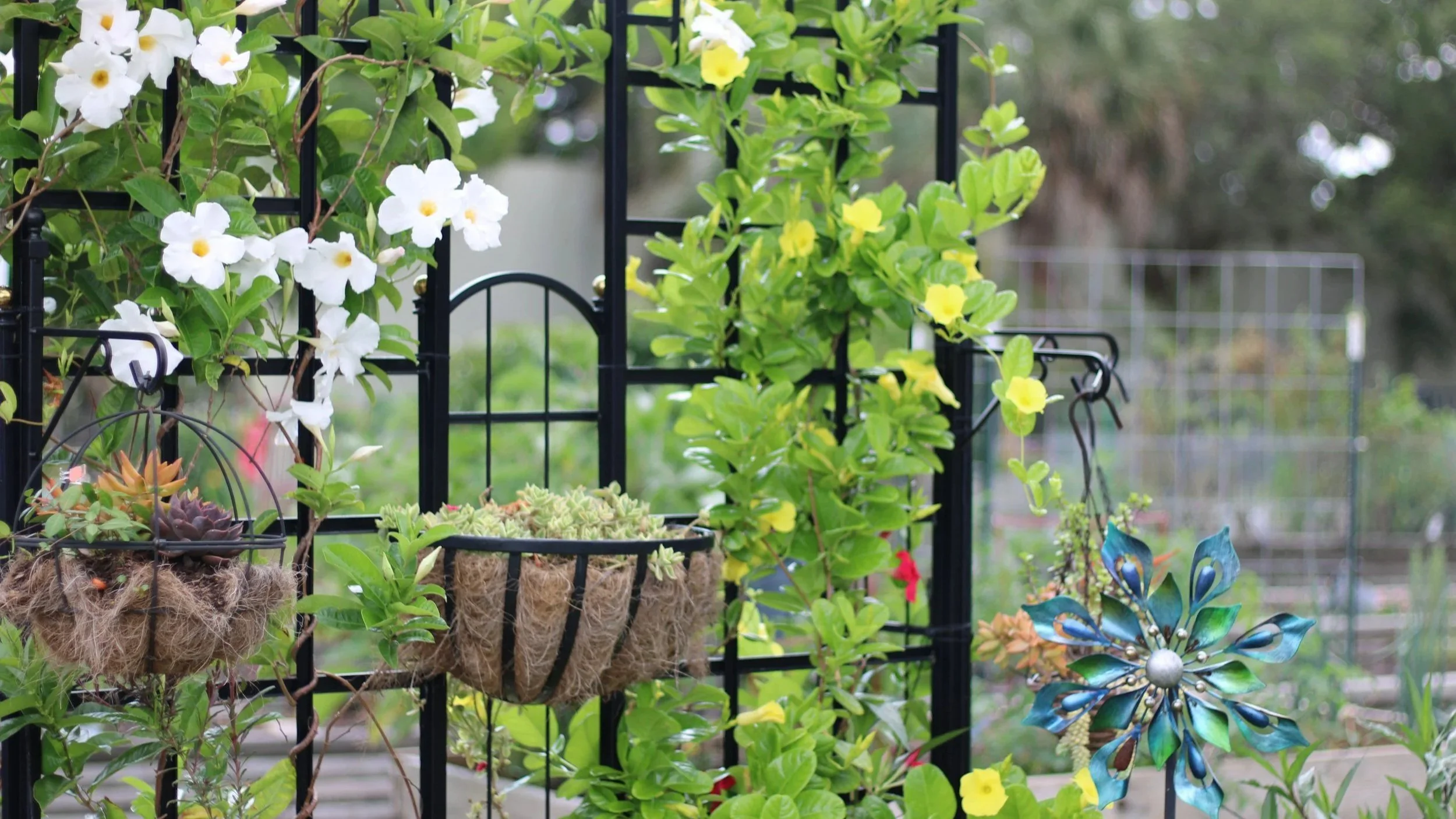
Trellis, not treadmill
A treadmill is effort without arrival. It is a movement that goes nowhere. It measures you. It exhausts you. It always asks for more.
A trellis is a light structure that supports living growth. A trellis does not create life. It simply gives life something to hold onto while it grows.
In the wilderness, most of us do not need a treadmill.
We need a trellis.
Something simple enough to keep, even when tired.
Something gentle enough to avoid old guilt patterns.
Something real enough to keep us oriented.
A trellis is not a return to the old religious burden.
It is a small act of care for a tender life.
Two kinds of spaces we keep confusing
One of the tensions my fellow sojourner named is that we often ask one community space to do everything.
We want it to be deep friendship.
We want it to be spiritual formation.
We want it to be justice engagement.
We want it to be theological processing.
We want it to be emotional support.
We want it to be fun and light.
We want it to be low effort.
That is a lot to ask of one monthly call.
So here is a thought that might relieve some pressure.
There are at least two kinds of gatherings, and they are both sacred.
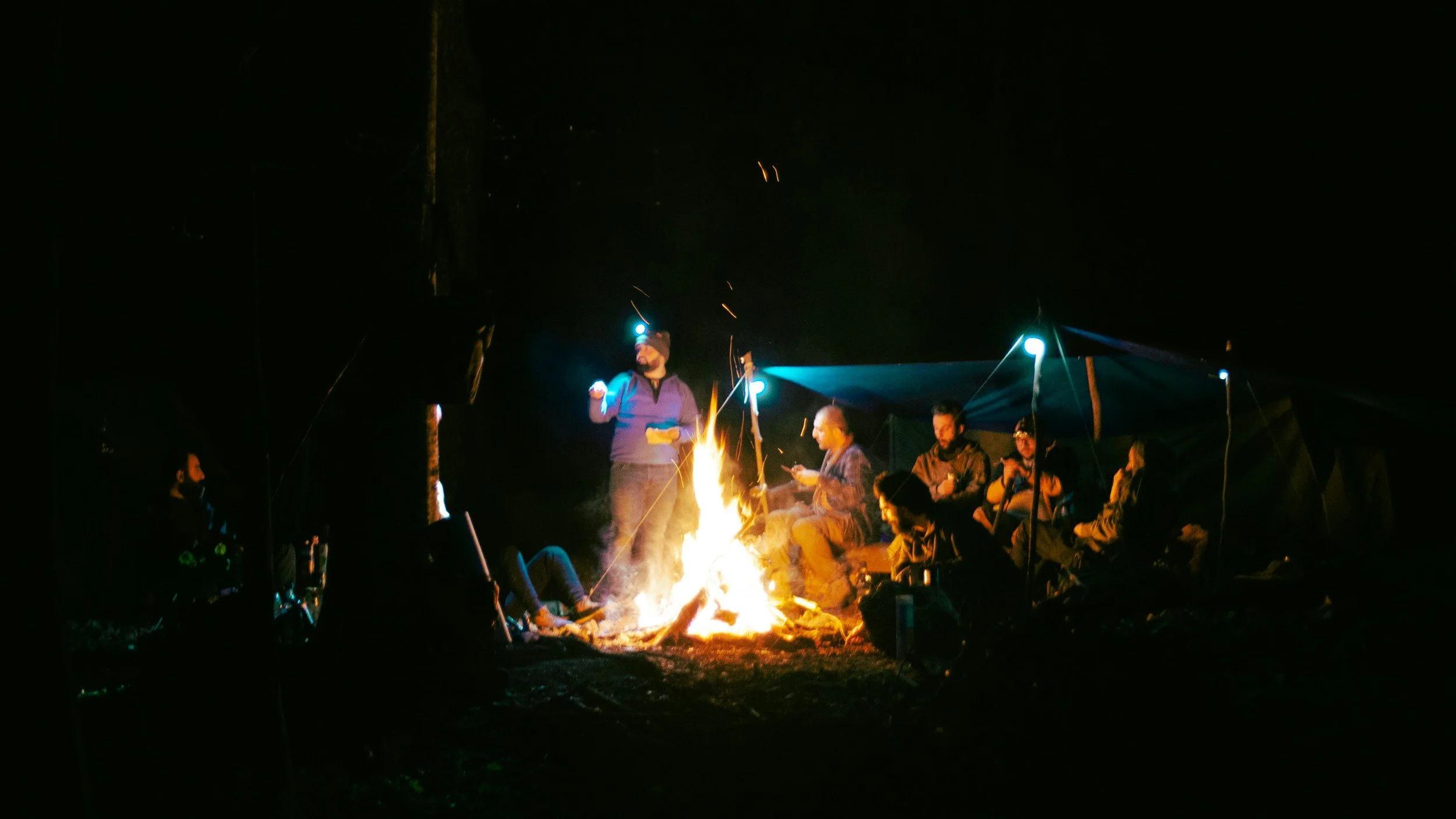
1. Campfire space
This is where we show up as we are. We tell the truth. We laugh. We grieve. We talk about work, parenting, relationships, numbness, longing, anger, and hope. We do not force “spiritual talk,” nor do we banish it. We let life be whole.
Campfire space matters because loneliness is not healed by better theology.

2. Compass space
This is where we name our desire to stay oriented toward God, even when our beliefs feel unsettled, church no longer fits, and prayer is complicated.
Compass space is not about performance. It is about direction.
Both are needed.
And not everyone needs both in the same season.
One practical option is not to fight over what Camino “should” be.
Instead, bless both spaces and let people choose.
A trellis you can actually keep
My fellow sojourner said something important: commitment is grounding.
Not the guilt kind of commitment. The gentle kind. The kind that says, “Even if I feel foggy, I will show up to something that reminds me I am not alone, and I am not lost.”
So here is a simple monthly trellis, built for wanderers.
Not forpeople trying to be impressive.
For tired people trying to stay honest.
The 60-minute Camino trellis
Arrival
Two minutes of silence. Phones down. Feet on the floor. One breath prayer if you want. Something like, “God, I am here.”One real check in question
Not twenty updates. One question that opens the heart.
Example: “Where did you feel pulled toward life this month, and where did you feel pulled toward shutting down?”A short grounding practice
Choose one, keep it consistent for a season.
- A short lectio on a few verses.
- A short examen of the day.
- A short practice of naming what you are carrying.
Five to seven minutes total.One deepening question
Use a shared list if that helps. Or rotate who brings it.
Example: “What do you need right now that you are afraid to admit you need?”Closing
Everyone names one sentence.
- “Next step.”
- Or “One thing I want to practice.”
- Or “One thing I want to release.”
That is it.
No homework unless you want it.
No pressure to sound spiritual.
No fixing each other.
Just a trellis.
What is worth protecting
I think my friend is naming something many of us feel but struggle to say.
If the space becomes only for casual conversation, it can lose its soul.
If the space becomes too spiritual, it can recreate the old burden.
If the space tries to please everyone, it can slowly become nothing.
So the goal is not to find the perfect format.
The goal is to protect a living thing.
A space where people can be honest.
A space where God is not weaponized.
A space where structure serves love, and never replaces it.
A word to the tired ones
If your faith feels like work right now, you are not failing.
You might simply be healing from a version of Christianity that taught you God’s closeness was earned.
In the wilderness, God often does something different.
Not louder.
Not more demanding.
More faithful.
The question is not, “Can you do enough to keep faith alive?”
The question is, “What small trellis helps you stay open to the God who is already here?”
Reflection questions to ponder
When does spirituality feel like receiving, and when does it feel like earning?
What is one small anchor that keeps you oriented without becoming a burden?
Do you need campfire space, compass space, or both in this season?
What would “lower expectation, higher honesty” look like for you?
If you are part of Camino, consider this a gentle invitation. Bring your real need. Not the need you think you should have. The real one.
If you are not in Camino but are wandering, you are still welcome here.
Wilderness roads are real roads.
And you do not have to walk them alone.