

I know what you might be thinking. Presence? With kids? During the busiest season of the year?
You’re imagining those Advent devotionals that promise peace and quiet contemplation. You’re picturing candles burning in silent rooms, stillness settling like snow, and long moments of undisturbed prayer. And then you’re looking around at your actual life. The noise. The mess. The constant motion. The way your children seem to have a radar for the exact moment you close your eyes to pray.
Let me say this gently: I see you. I know the gap between the spiritual life you long for and the beautiful chaos you’re actually living. I know how it feels to want to slow down during Advent while your calendar screams at you to speed up. I know the particular ache of wanting to meet God in the silence when silence feels like a luxury you cannot afford.
But what if I told you that the chaos is not standing between you and God’s presence? What if the noise and the mess and the constant interruptions are not obstacles to overcome, but the very place where God is waiting to meet you?
This Advent, I want to share something with you that might change everything. Practicing presence with kids is not only possible. It’s powerful. And your children need this more than you might imagine.
Let me start with a story that surprised me as much as anyone.
When Silence Surprised Us All
Years ago, I found myself standing before a room full of seventh- and eighth-graders at a middle school retreat. I had just finished explaining to the retreat director that my session would focus on silence, centering prayer, and contemplative listening. The look on his face told me everything I needed to know. He was gracious, but skeptical.
The whole retreat had been designed around high-energy activities. Kids were everywhere, running, laughing, talking over each other. Some had ADHD. Others couldn’t sit still for more than a few minutes. He gave me a kind smile and said, “Good luck.”
I’ll be honest with you. I doubted myself, too. Maybe I was being naive to think these kids could enter silence.
But after that first session, something happened that none of us expected. Yes, some kids fell asleep. I won’t pretend otherwise. But others came up to me afterward with something in their eyes I hadn’t seen before. Gratitude. Relief. Recognition.
One boy told me the moment of silence helped him breathe for the first time all weekend. A girl quietly confessed that she didn’t know how badly she needed stillness until she finally tasted it. One student with ADHD said something I’ll never forget: “That was really hard, but I actually needed it.”
They weren’t too young.
Their souls were hungry for something they couldn’t name.
They simply didn’t know how to find their way into the quiet without someone to show them the way. And when we entered it together, something deep within them recognized a home they didn’t know they’d been longing for.
This experience planted a seed in me that has grown into a conviction. Our kids need presence. They need it desperately. Perhaps more than any generation before them. And we are the ones who can guide them there.
The Hunger No One Talks About
Think about the world your children are growing up in. They are the most digitally connected generation in human history, yet they are drowning in loneliness. They can video chat with someone across the world but struggle to look a friend in the eye. They have access to endless information, but don’t know how to be still with their own thoughts.
Their nervous systems are overstimulated. Their attention is fractured. Their souls are restless in ways they can’t articulate.
And we, their parents, often assume they can’t practice contemplation because they’re too restless, too young, too distracted. But I want to invite you to see their restlessness differently. Their inability to be still is not a reason to withhold these practices. It’s the very reason they need them.
Your child’s fidgeting is not a character flaw. It’s a sign of a soul that hasn’t yet learned to rest. And rest, true rest, is learned. It’s taught. It’s practiced. It’s shared.
Here’s what I’ve discovered over years of walking with families: presence isn’t something we achieve in isolation and then pass down to our children. Presence grows between us. It’s caught more than taught. It’s modeled more than explained.
Your children will learn to be present because they see you practicing it. Because you invite them into it. Because you create space for it in your home, however imperfectly.
Friday Night at Our Table
Let me bring you into our home for a moment. Every Friday night, our family gathers at the table to begin the Sabbath. My wife, my ten-year-old daughter, and I sit together. We ring a bell, and the sound signals a shift. The noise of the week begins to settle. We light a candle, marking this time as different, as holy. We sit in silence for a few moments. Sometimes it’s only a minute. Sometimes it stretches to two or three minutes. We read a short passage of scripture. We pray.
And from that moment until the next morning, we unplug from screens. We rest.
What surprises me most is not that we do this. It’s that my daughter has come to love it. Sometimes she enters the silence with more grace than I do. She settles into it like she’s been waiting for it all week.
But this didn’t happen overnight. And it didn’t happen because we suddenly decided to be a contemplative family. It happened because many small practices, accumulated over the years, prepared the soil for this moment.
I want to share some of those practices with you, not as a formula to follow, but as breadcrumbs on a path you might walk in your own way.
The Slow Work of Connection
Reading Aloud: Where Presence Begins
When my daughter was three years old, I read a book that changed our family. The Read-Aloud Family by Sarah Mackenzie made a case I hadn’t considered before. Reading aloud to your children isn’t just for the early years. It’s one of the most powerful ways to connect with them at any age.
I was already reading to her at bedtime, but I assumed the practice would end once she learned to read on her own. Instead, I kept going. And kept going. She’s turning eleven this month, and she still asks me to read to her.
We finished all seven Narnia books when she was nine. When we turned the last page, she looked up at me and said, “Can we start over? I want to go back.” So we did.
But here’s what I didn’t expect. Reading aloud became more than storytime. It became connection time. That connection built trust. Trust built safety. Safety built emotional closeness. And that closeness prepared her heart to receive spiritual practices.
Do you see the pattern? Presence doesn’t start with silence. It starts with connection. A child who feels connected to you can learn to be still. A child who trusts you will follow you into the quiet.
We also started listening to audiobooks together during long drives to soccer practice and physical therapy appointments. Instead of handing her a screen, we shared stories. Those hours in the car became hours of shared wonder. Presence, it turns out, often happens in the in-between moments.
Creative Engagement with Scripture
A few years ago, I wanted to introduce my daughter to social media in a healthy way, before the world introduced her to it in harmful ways. So I created a private Instagram account, just for the two of us.
During our bedtime reading, we started picking passages from scripture together. I’d read aloud from Proverbs or the Gospels. She’d listen, and then I’d ask her which verse stood out to her. We’d talk about why she chose it. What did she notice? What did it make her feel? What question did it raise?
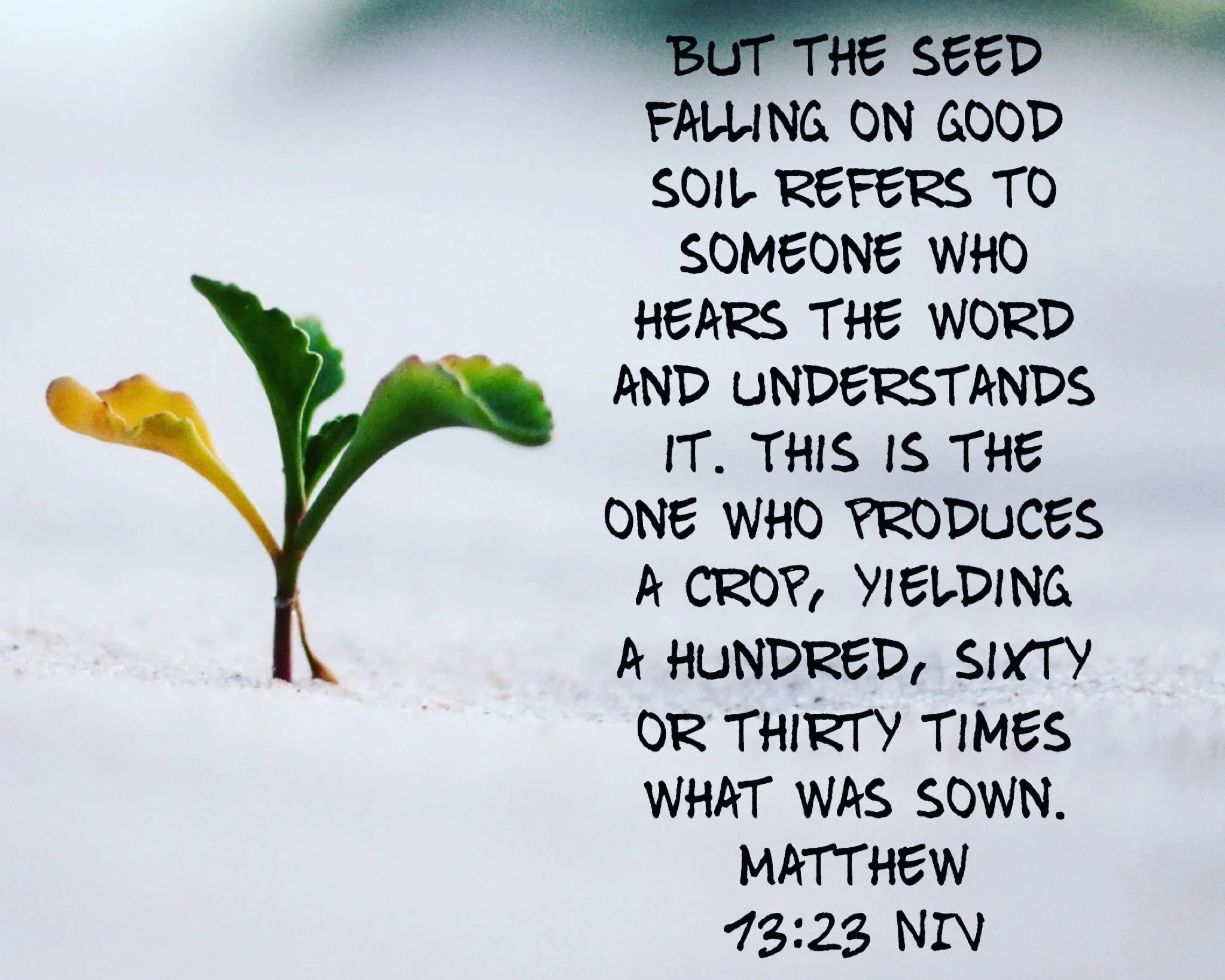
Then we’d open an app called Typorama and create an image with her chosen verse. She’d pick photos that captured what the words meant to her. We’d design it together, and then post it to our private account where only my wife and I could see it.
This practice did something beautiful. It taught her to slow down with scripture. It helped her articulate what she noticed and why it mattered. It showed her that social media could be a tool for blessing instead of comparison. And it gave us a creative ritual that deepened our bond.
Presence with scripture doesn’t have to look like formal Bible study. It can look like curiosity, imagination, and shared discovery.
Breath: The Gift Always Available
After reading and creating our post, we’d practice breathing together. We used an app called Breathwrk to guide us through calming patterns. Four counts in, seven counts hold, eight counts out. Or four in, six out, four in, six out.
It helped her fall asleep. It taught her to regulate her own nervous system. It gave her a tool she could use anytime, anywhere. And it prepared her to enter silence during our Sabbath gatherings.
Breath is the most accessible spiritual tool a child can learn. It’s always with them. It costs nothing. It requires no special space. And it opens the door to presence in a way that nothing else can.
Slow Fun: The Unexpected Teacher
I had my daughter later in life, and my body has limits that younger parents might not face. I couldn’t get down on the floor and wrestle. I couldn’t run around the backyard for hours. So we found a different kind of play.
Board games. Card games. Strategy games that required thinking, patience, and slow engagement. Catan. Bonanza. Games where you had to wait your turn, plan ahead, and sit still.
I didn’t realize at the time that I was teaching her to enjoy slower rhythms. I thought I was just doing what I could with what I had. But looking back, I see how those games prepared her to sit with us at the Sabbath table. Presence often sneaks in through side doors we didn’t even know we’d left open.
The Pattern That Changes Everything
Do you see what happened in our family? None of these practices, on their own, is particularly impressive. Reading aloud. Creating art with scripture. Breathing together. Playing board games. Simple things. Small things.
But together, over the years, they created something powerful. They created many connection points. And those connection points opened my daughter’s heart to spiritual practices she might have otherwise resisted.
Ten years of small, consistent connections laid the foundation for weekly Sabbath silence. Presence didn’t arrive suddenly. It grew slowly, gently, through ordinary moments we chose to make sacred.
And here’s what I want you to hear: your family’s path will look different from ours. It should. You’re not called to copy what we did. You’re called to pay attention to your own life, your own children, your own rhythms. The question isn’t “How do I do what they did?” The question is “Where is God already inviting me to practice presence with my children?”
The practices matter less than the pattern. And the pattern is this: presence is shared. Presence is modeled. Presence grows in relationship.
Advent Invitations for Your Family
This Advent season, you don’t need to overhaul your life. You don’t need to add seventeen new practices to an already overwhelming schedule. You need one or two small ways to practice presence together. That’s all. Just begin.
Here are some simple, realistic invitations. Choose one. Maybe two. Not all of them. Don’t overwhelm yourself. Just take one small step.
One Minute of Candle Silence
Light an Advent candle and sit together in silence for sixty seconds. Just one minute. Tell your children you’re going to practice being quiet together. You might be surprised by what happens in that small space. Even one minute matters more than you think.
Slow Scripture
Choose a single verse from one of the Advent readings. Read it aloud slowly, twice. Then ask one simple question: “What word or phrase stands out to you?” Don’t explain it. Don’t theologize. Just listen to what your children notice.
Advent Breath Prayer
Teach your children to breathe in the words “Come, Lord Jesus” and breathe out “Be near.” Practice it together before bed. Practice it in the car. Practice it when tension rises. Give them a prayer they can return to in any moment.
Blessing at Bedtime
Place your hand gently on your child’s shoulder or head and speak one simple sentence: “May God give you peace as you rest.” That’s all. One sentence of blessing. Watch how it shapes their sleep and your connection.
Family Sabbath Moments
You might not be ready for a full Sabbath practice. That’s okay. Choose one hour this week. Call it your “mini Sabbath.” Turn off all screens. Be together. Play a game. Read aloud. Take a walk. Do something that requires you to be present with each other.
Presence Walks
Bundle up and stroll outside together. Don’t rush. Name five things you can see. Five things you can hear. Help your children notice the world again, slowly, with attention.
A Word to the Weary
Maybe you’re reading this and feeling that familiar weight. The weight of one more thing to do. One more way you’re not measuring up. One more ideal you can’t quite reach.
Please hear me. This is not one more expectation to carry. This is an invitation to put something down.
You don’t have to do any of this perfectly. You don’t have to do all of it. You don’t even have to do most of it. You just have to begin somewhere, however small, however imperfect.
Your child doesn’t need you to be a perfect contemplative. Your child needs you. Your presence, flawed and human and real, is what prepares them to know God’s presence.
And if you try one of these practices and it doesn’t work? That’s okay too. Not every practice fits every family. You’re not failing. You’re learning. Keep experimenting. Keep paying attention. Keep asking God to show you where presence is already waiting in your home.
The Truth About Chaos and Grace
I want to return to where we started. The chaos. The noise. The constant interruptions that make presence feel impossible.
Here’s what I’ve learned: the chaos is not the enemy of presence. Chaos is the context in which grace appears.
Your toddler's interruption of your prayer isn’t a distraction from God. It’s an invitation to find God in the interruption.
Your teenager’s eye roll during family devotions isn’t a failure. It’s a reminder that presence is offered, not forced.
The mess in your house, the dishes in the sink, the laundry waiting to be folded, none of this disqualifies you from practicing presence. In fact, this is exactly where presence is practiced. Right here. Right now. In the midst of real life.
Advent asks us to wait for God’s arrival. But here’s the mystery: God is already here. God is in the chaos. God is in the noise. God is in the ordinary, exhausting, beautiful moments of family life.
You’re not waiting to practice presence until life calms down. You’re practicing presence right in the middle of the storm. And your children are watching. They’re learning that God is not found by escaping life, but by entering it more deeply.
The Gift You’re Already Giving
Let me say one more thing before we part. Something I need you to really hear.
You are already forming your children spiritually, whether you realize it or not. Every day, in countless small ways, you are teaching them about God’s presence. Not through what you say, but through how you show up.
When you take a breath before responding in anger, you’re teaching them that God’s Spirit can calm our storms.
When you apologize for losing your patience, you’re teaching them that grace is real and humility is holy.
When you sit down and really listen to them, putting your phone aside and meeting their eyes, you’re teaching them that they are worth paying attention to. And if they are worth your attention, how much more must they be worth God’s?
When you let them see you pray, even when it’s messy and distracted, you’re teaching them that prayer is for real people, not just saints.
You don’t have to be perfect. You don’t have to have it all figured out. You just have to keep showing up. Keep trying. Keep returning to presence, again and again, no matter how many times you lose it.
That returning is the practice. That returning is what your children need to see.
This Advent, Begin Again
Advent is the season of beginning. Of waiting. Of hope rising in the darkness. Of God drawing near in the most unlikely ways.
This year, what if your Advent practice was simply this: practicing presence with your children, right where you are, right as you are?
Not someday when life is calmer. Not when you have more time, more energy, or a better plan. Now. Today. This week.
Light a candle. Take a breath. Read one verse slowly. Speak one blessing. Walk one slow walk.
Begin small. Begin imperfectly. But begin.
And trust that God is already present in your home. God is in the laughter and the tears. God is in the mess and the beauty. God is in the chaos and the rare moments of quiet. God is with you, right now, in all of it.
Your children don’t need a perfect spiritual director. They need you. They need your presence. They need you to show them, by how you live, that God is near.
And you don’t have to do this alone. God is walking with you. Other parents are walking this path too. We’re all finding our way, together, one small practice at a time.
This Advent, you are not alone. God is with you. And we’re here, walking alongside you, learning together how to find presence in the beautiful chaos of family life.
May you find God in the interruptions.
May you discover grace in the mess.
May you and your children grow together in the practice of presence.
Come, Lord Jesus. Be near.