
Reaching for the Sword
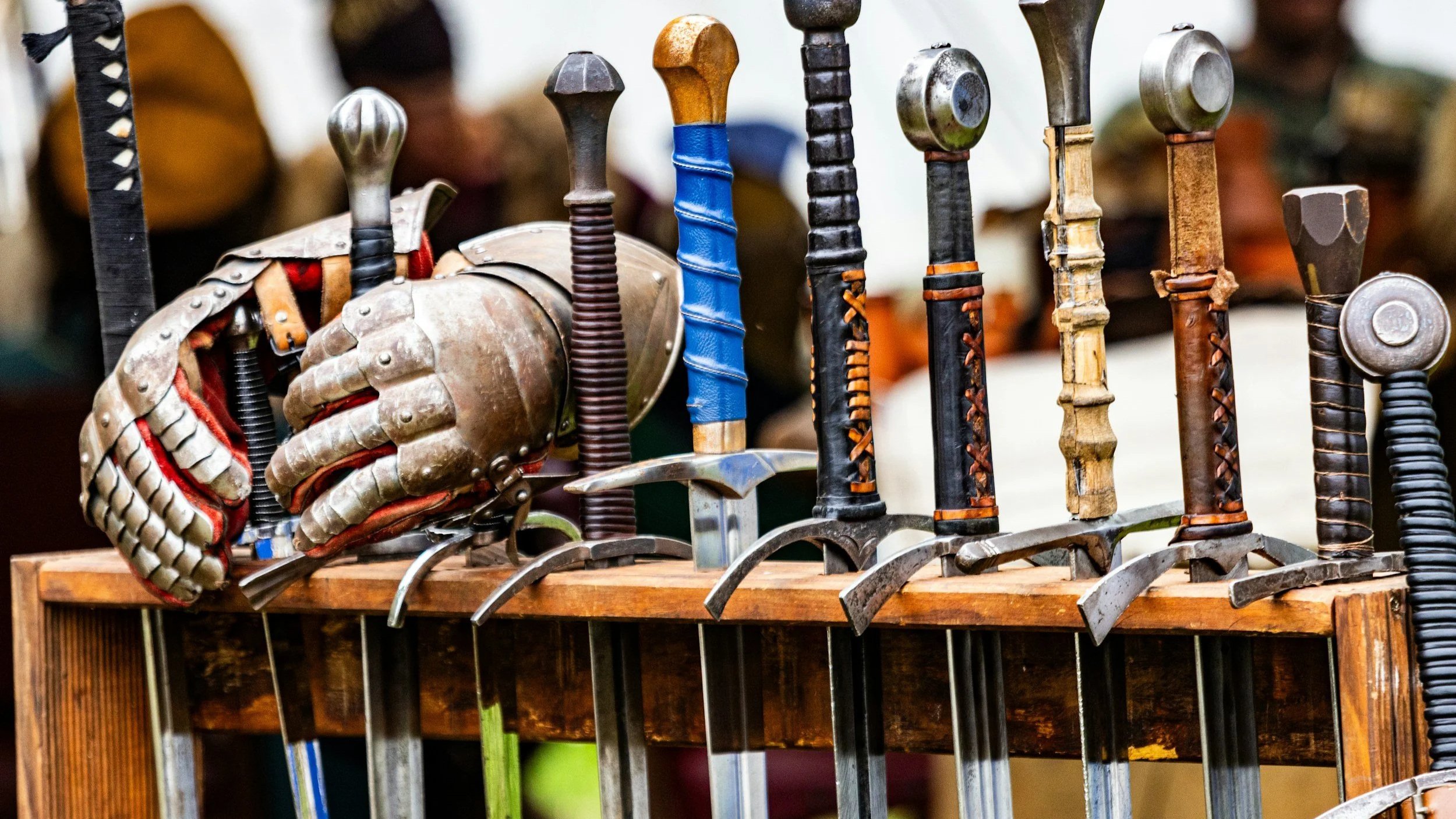
I still remember the very first sermon I ever preached.
It was in my preaching class at Gordon-Conwell Theological Seminary. The assignment was simple enough. Preach a ten-minute sermon. But it felt like one of the most nerve-wracking experiences of my life, because after each sermon, the whole class went into critique mode. Our professor told us to be honest and constructive. We were there to help each other grow. Still, we were usually gentle with one another because we all knew our turn was coming, and none of us wanted to be judged too harshly when it was our turn.
I look back on that day now and still chuckle.
I had chosen John 18:1-14, the scene where Jesus is arrested in the garden. I was so nervous and wanted to make absolutely sure I had everyone’s attention that I decided to open by imagining the scene from Peter’s point of view. In my mind, it was dramatic and powerful. So I enacted Peter drawing his sword and striking with it.
What I did not account for was the poor soul sitting in the front row.
As I brought my imaginary sword down with full rookie preacher intensity, it looked to her like I was cutting off her ear. She screamed.
So yes, I accomplished my goal. I got everyone’s attention.
I also received some very useful constructive criticism. Maybe tone it down a little.
At the time, I was deeply embarrassed and felt terrible that I had briefly terrified a classmate in the name of sermon illustration. Now I can laugh and call it what it was. A rookie attempt. An overeager preacher trying too hard to impress.
And honestly, I think about that moment often whenever Maundy Thursday comes around, because this scene happened after the Last Supper, late on Thursday evening. So when tonight comes, and many of us gather around the table, wash feet, pray, or sit quietly after a Maundy Thursday meal, this story is never far from my mind.
Humor aside, that passage has stayed with me all these years because Peter’s action is so revealing.
Why did he bring a sword?
That question gripped me then, and it still grips me now.
Why did Peter come armed? What was he expecting to happen that night? He was a fisherman, not a soldier. He was not trained temple security. He was not a Roman guard. So why the sword?
To me, Peter’s sword tells us what kind of Messiah he was still hoping for.
He believed Jesus was King, and he was right. But he misunderstood the kind of King Jesus was. Peter seems ready for a fight, a showdown, a revolution. He appears prepared to defend Jesus and the movement, and to force the kingdom into the world if necessary. He seems ready to die for Jesus, but in a way Jesus never asked for.
Peter was ready to fight the wrong battle.
And maybe that is why this moment matters so much.
What sword are you reaching for?
John’s Gospel is especially striking here. When the arresting crowd arrives and Jesus steps forward, he asks whom they are seeking. They answer, “Jesus of Nazareth.” Jesus says, “I am he,” and the crowd draws back and falls to the ground (v.6). Before Peter ever reaches for the sword, Jesus has already made it clear that he is not helpless. This is not a scene where Jesus needs saving. This is a scene where Jesus is fully present, fully surrendered, and fully in command.
Then Peter strikes with the sword anyway.
And what a strike it was.
Whether his aim was poor or the other man reacted quickly, Peter only managed to cut off the ear of the high priest’s servant. John even gives us the servant’s name, Malchus. That detail has always stood out to me. John may have named him because the name meant something to his readers. This was not just some anonymous person in the chaos. This was a man with a name, a face, and a life. Maybe someone people knew. A neighbor. A friend’s son. Someone close enough to make the story feel personal.
In Luke’s Gospel, Jesus even heals Malchus’ ear.
Think about that.
This story lands closer to home than we might first realize. One of Jesus’ closest disciples uses violence in his defense, and even though Jesus immediately reverses the injury, the whole moment is full of tension. How would you react if you were there? Angry? Grateful? Confused? At whom? For what?
After all, both sides came prepared for force. One side came with torches, lanterns, and weapons to take Jesus away. The other side, Peter, came armed and ready to defend. It is the kind of scene where each side could point at the other and blame them for the violence. Everything is chaotic and disorienting. But whatever blame gets assigned, one man was wounded. And Jesus will not build his kingdom by leaving wounded people behind him.
That alone should stop us.
Then comes Peter’s real correction. Not from a seminary classroom, but from Jesus himself.
“Put your sword away.”
Or in John’s version, “Put your sword into its sheath. Shall I not drink the cup the Father has given me?”
That is more than a correction of behavior. It is a correction of imagination.
Peter thought faithfulness meant fighting for Jesus. Jesus shows him that faithfulness, in this moment, means surrender to the Father, refusing violence, and walking the path of suffering love.
Can you imagine what that revelation must have done to Peter?
Everything he expected was falling apart. The revolution he imagined was not happening. The King he loved was not taking power. The Messiah he trusted was not calling down fire, raising an army, or crushing enemies. Instead, Jesus was giving himself over.
That kind of moment can leave a person confused and disoriented.
And honestly, it can do the same to us.
Because many of us do not mind following Jesus as long as he fits the version we already want. We like a Jesus who confirms our tribe, blesses our instincts, and defeats our enemies. We like a Jesus who makes us feel right, strong, and in control.
But the real Jesus keeps undoing those fantasies.
He refuses to be our weapon.
He refuses to bless domination.
He refuses to build the kingdom through fear, coercion, national pride, racial superiority, or destruction dressed up as righteousness.
And I have to say this plainly. There seems to be a lot of Peters with a sword right now. Many people claim the name of Christ, yet seem drawn to a version of Jesus who rules by force, crushes enemies, purifies the nation, and restores power to the “right” people. There is a kind of Christianity in our country that seems more interested in winning than in becoming like Christ. More interested in power than in love. More interested in punishing enemies than in healing wounds.
But that is not the Jesus of the garden.
The Jesus of the garden heals ears.
The Jesus of the garden stops his own followers from harming people in his name.
The Jesus of the garden walks toward the cross rather than seize power through violence.
That is the Way of Christ. And it is still so easy for us to miss it.
Most of us are not carrying literal swords. But we still know how to reach for other weapons. We know how to use outrage, contempt, fear, and certainty to make ourselves feel powerful. We know how to turn faith into a fight. We know how to treat people as threats instead of neighbors. And then we convince ourselves that this is courage, conviction, or righteousness.
But Jesus keeps saying, Put that away.
Not because truth does not matter. Not because evil is not real. But because his kingdom does not come through the kind of power the world keeps trusting.
So maybe these are the only questions we need.
Are we following Jesus as he is, or clinging to a version of Jesus that makes us feel like we are winning?
Are we being shaped by the way of the cross, or by the world’s love of power?
Are we becoming more like Christ, or just more certain, angry, and afraid?
Peter’s moment in the garden is revealing. It shows how easy it is to be sincere and still be wrong. To love Jesus and still misunderstand his way. To be close to him and still reach for the wrong thing.
That is why this story matters.
Faithfulness is what Jesus demonstrated when he was betrayed and seized. Clear, steady, courageous, and loving. Refusing to wound people to prove a point. Refusing to grab power. Refusing to hate.
So tonight, on Maundy Thursday, maybe this is the invitation.
After the meal, after the prayers, after the singing, after the quiet, let us sit with this question: What sword am I still carrying?
And let us listen for the voice of Jesus again.
Put it away. Come, follow me.