
Growing in Two Directions: What Trees Teach Us About Spiritual Formation
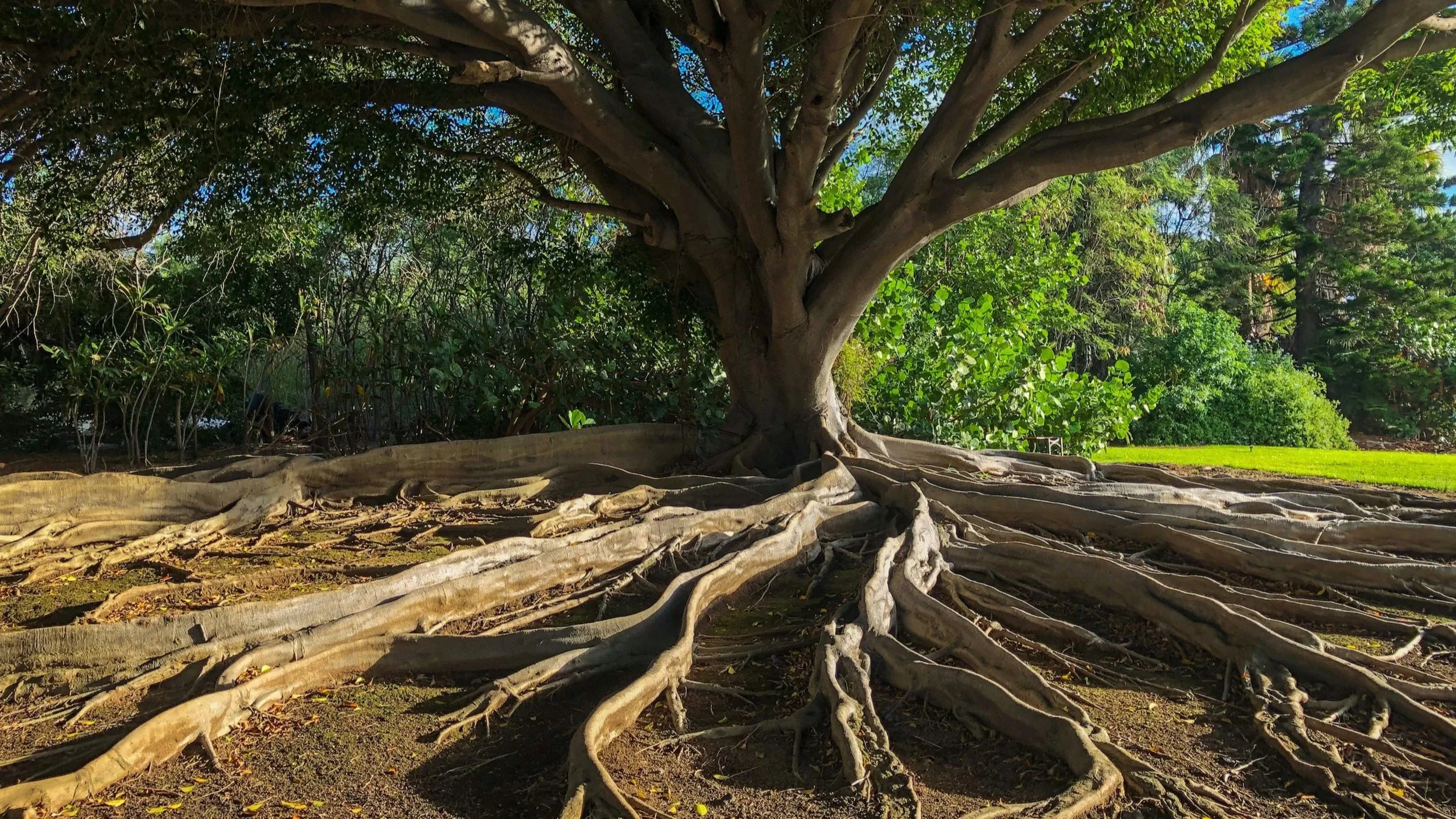
Last weekend, my daughter and her family were working in their yard. A few years earlier, I had helped them plant two small bushes—one on each side of the front steps. At the time, the plants were modest, taking up only a small corner of the garden bed at the base of the porch.
Five years later, things looked very different.
My daughter noticed shoots spreading everywhere, quietly taking over the entire garden bed. What had once been two tidy little plants had become sprawling bushes. When we decided it was time to remove them, we began to dig.
That’s when we discovered the real story.
Beneath the surface was a dense, intricate network of roots—stretching far wider and deeper than anything we had imagined. While I had only paid attention to the growth I could see above the ground, an entire world of activity had been unfolding below it, hidden from view.
As we worked, I found myself reflecting on how a bush—or a tree—grows in two directions at once. Downward into the unseen. Upward into the visible. And how much that mirrors the way spiritual formation actually happens. There is a quiet wisdom held within a tree—one that speaks not only of biology, but of the soul.
A tree grows in two directions at once. One movement is hidden beneath the surface; the other rises visibly into the light. Together, they offer a profound picture of how true growth—spiritual growth—actually unfolds.
The Hidden Descent: Gravitropic Growth
If a tree could speak, it might begin its story underground.
“My roots follow gravity,” it would say. “I press downward into the soil—into what is hard, damp, dark, and unseen.”
This is gravitropic growth.
It is not glamorous. No one gathers to admire roots. There is no applause for what happens in the dark. And yet, this is where the tree’s life is secured.
Roots push into resistant soil. They wind around stones. They search for water in dry places. They grow slowly, persistently, without recognition. In this hidden descent, the tree is:
anchored against the forces that would topple it
nourished from unseen sources
strengthened in ways that cannot be immediately measured
Without this downward growth, the tree cannot stand.
The Visible Ascent: Phototropic Growth
At the same time, the tree tells another story—one that unfolds in the light.
“My branches reach toward the sun,” it says. “I stretch outward and upward into what is warm, open, and seen.”
This is phototropic growth.
Here, the life of the tree becomes visible. Leaves unfurl. Branches extend. Blossoms and fruit appear. This is the growth that draws attention—the beauty, the expansion, the fruitfulness.
And yet, everything seen above the ground depends entirely on what has been formed below it.
A Mirror for the Spiritual Life
The life of the spirit follows this same pattern. We, too, are invited to grow in two directions at once.
The Inner Life: Hidden, Contemplative, Gravitropic
There is a necessary descent in spiritual formation—a movement into the depths of our own soul.
This is the hidden work:
sitting in silence before God
facing wounds, fears, and disordered attachments
releasing the false self we constructed for survival
learning trust, surrender, and deep rootedness in God
This kind of growth often feels like entering darkness. It is slow. It is quiet. At times, it may even feel like loss.
But this is where anchoring happens.
It is here, in the unseen places, that we are formed into people who can withstand the storms of life—not because we avoid them, but because we are rooted deeply enough to endure them.
The Outer Life: Visible, Active, Phototropic
At the same time, there is a movement outward—into the visible expression of our lives.
This is the work others can see:
acts of love and compassion
justice-seeking and mercy-giving
leadership, service, and presence in the world
the bearing of fruit in relationships and community
This growth is good. It is necessary. It reflects the light we are reaching toward.
But without the hidden work, it becomes fragile. It can turn performative—driven more by image than by substance. It may look alive for a time, but it cannot sustain lasting fruit.
The Integration: Depth and Fruitfulness
A tree does not choose between roots and branches.
It must grow downward and upward at the same time.
If it only grows upward, it becomes vulnerable—easily shaken, easily broken.
If it only grows downward, it remains unseen—alive, but not life-giving to others.
True growth holds both together.
Spiritual formation is not merely about what is visible, nor is it only about what is hidden. It is the integration of:
depth and expression
silence and action
being and doing
The deeper the roots descend into darkness, the more freely the branches can rise into the light.
A Final Reflection
Perhaps the most transformative work God does in us is the work no one else can see—the quiet surrender, the honest prayer, the slow healing, the unseen rooting of our lives in love. From that hidden place, something steady and beautiful begins to rise. And this is why spiritual direction matters: it offers a sacred space where we are gently guided to attend to the inner life—the hidden, contemplative, gravitropic descent that anchors all true growth. Downward into God. Upward into love.