Between Two Worlds
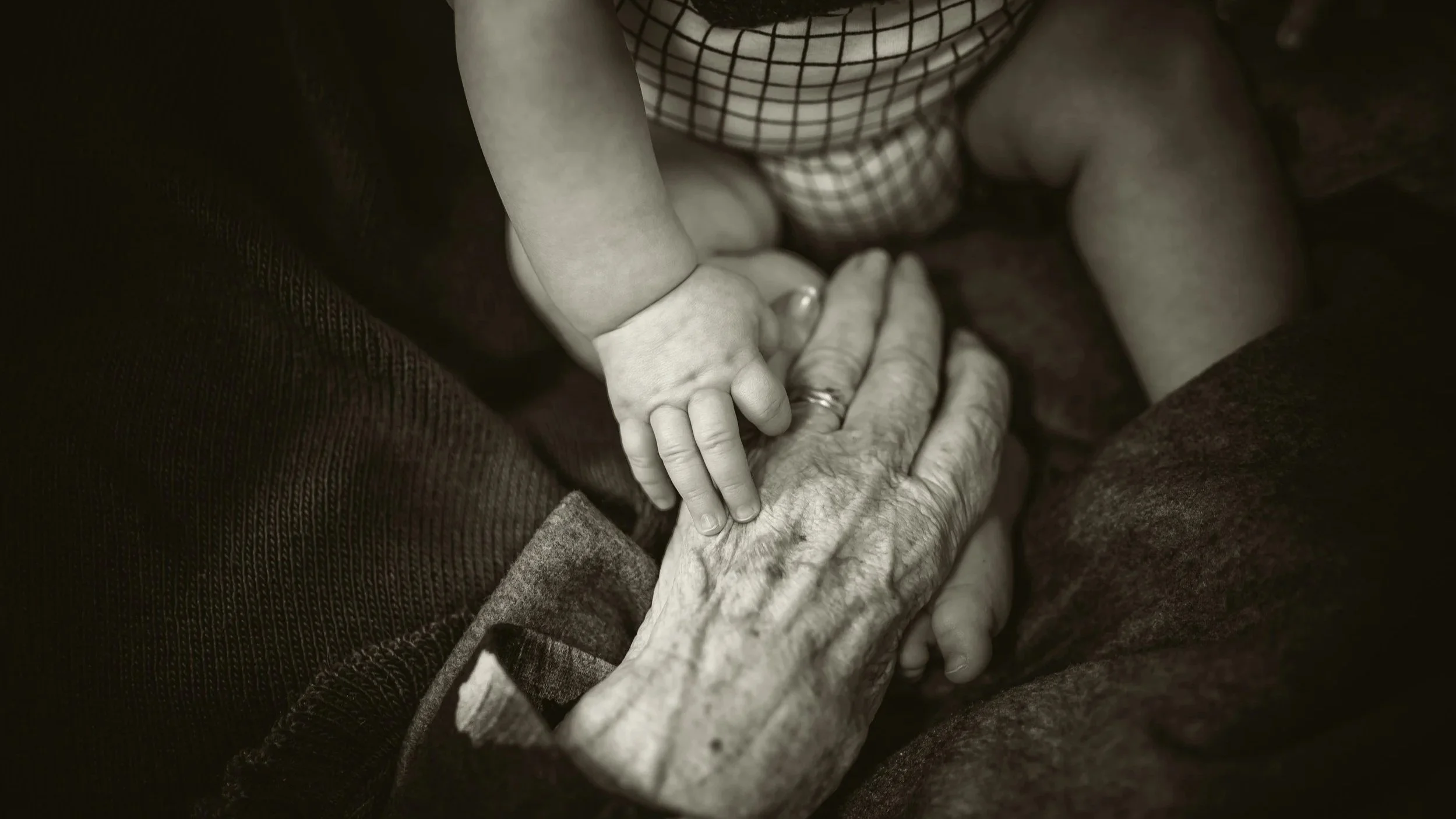
Standing Between the Vibrant and the Sacred Winding Down
There are seasons that arrive without asking anything from us. They simply come, and once they do, we realize life is no longer arranged the way it used to be.
Many of us know that kind of season.
The conversations that once revolved around work, kids, plans, and the next chapter begin to include doctors, diagnoses, treatments, and time. News that used to feel ordinary starts to carry more weight. Without quite noticing how we got there, we find ourselves standing in the middle of life with our hands full of love and grief at the same time.
That is where I have felt myself lately.
My father’s cancer has returned for the third time. He is still himself. He is clear, present, and very much alive in spirit. But something in him has shifted. There is a settled acceptance in the way he talks now. More than once, he has said, without bitterness, that he has lived long enough. I can hear peace in those words, but as a son, I also feel the ache of hearing them.
One day, I pushed back a little. I asked whether he wanted to be around to see his granddaughter grow older. The change in his face was immediate. He lit up and said, “I intend to be around to see her get married.”
That response gave me some relief.
My youngest daughter feels this, too, in her own honest way. She has said more than once that seeing her grandpa only twice a year is not enough. She says it simply, but children often speak truths that reach deeper than we expect. In her words, I hear how much a grandparent can shape a child just by being loved and being present.
At the same time, my father-in-law’s lung disease has been advancing. What once felt like a conversation about options has started to feel more like a conversation about time. Watching this unfold in my wife has been its own kind of sorrow. We can stay close, be tender, and pray, but we cannot remove that ache for someone we love. Some grief can only be accompanied.
I have also watched friends respond to this season of life in ways that have deeply moved me. One took unpaid leave and flew to Taiwan to be with her father as his health declined. She did not make much of it. She just went. Love does that sometimes. It gets very clear about what matters.
All of this has been clarifying for me.
It has made me realize how many of us are living in a strange middle stretch of life where we can see in both directions at once. We can look one way and see those who are still beginning. Children, younger adults, people still becoming themselves. Then we look the other way and see those who are aging, slowing down, letting go, and moving closer to the edge of this life. And there we are, somewhere in between, loving both.
That middle place has its own ache, but it also carries its own gift.
We are old enough now to know that time is not theoretical. Bodies do change. Parents do age. Friends do receive hard news. Endings do arrive. But many of us are still young enough to build, guide, encourage, and pour into others. We are still helping shape what comes next while learning how to honor what is winding down.
That feels like holy work to me.
Scripture has always seen aging differently than our culture does. We live in a world that rewards speed, celebrates novelty, and quietly sidelines anyone who no longer seems efficient. But Proverbs offers another vision: “Gray hair is a crown of glory; it is gained in a righteous life” (Proverbs 16:31). Gray hair is not treated as a problem to solve. It is seen as dignity, as evidence that a life has been weathered and formed.
Then Proverbs says, “The glory of young men is their strength, but the splendor of old men is their gray hair” (Proverbs 20:29). Both belong. The energy of youth and the depth of age were never meant to compete. They were meant to bless one another.
I think that is part of what we have lost.
Modern life has divided the generations so thoroughly that we barely know how to share life together anymore. Everyone has their own lane, their own room, their own ministry category. Some of that is understandable, but something essential gets lost when the young and the old stop really knowing one another. Children need elders whose lives carry steadiness, memory, and wisdom. Older adults need the honesty, hunger, and aliveness of the young.
I think of my daughter again when I say that. She probably cannot explain why time with her grandpa matters so much, but she knows that it does. Children often recognize substance before they have words for it.
As I have been sitting with all this, I keep coming back to how much this season changes the questions that matter. In younger years, it is easy to be absorbed with building a life, proving ourselves, and becoming someone. Richard Rohr talks about the first half of life as building the container, and the second half as discovering what the container is actually for. That rings true. At some point, life becomes less about image and more about substance. We care less about proving ourselves and more about becoming the kind of people who can hold sorrow, love well, and stay present.
Maybe that is why this season feels so exposing and so sacred at the same time.
Many of us are being drawn into a ministry we did not exactly plan for. We may not have formal training for it. We may not work in hospice or chaplaincy. But life itself starts teaching us. It teaches us through phone calls, family conversations, hospital visits, quiet prayers, and the simple work of staying near people when there is nothing impressive left to say.
Love often looks much less dramatic than we imagined. It looks like making time. It looks like listening without rushing. It looks like sitting beside someone whose body is failing and refusing to treat them as if their story is over. It looks like standing with a spouse whose heart is breaking for a parent. It looks like rearranging life when someone we love becomes fragile.
Psalm 71 gives language to what many aging people may feel and may not know how to say out loud: “Do not cast me off in the time of old age; forsake me not when my strength is spent” (Psalm 71:9). Beneath so much aging and vulnerability is that plea. Do not forget me. Do not push me aside. Do not treat me as if I no longer matter.
For many of us living in this middle stretch of life, part of our calling may be to answer that prayer with the way we live. We do it when we make room, when we honor those who are aging instead of moving them to the edges, and when we refuse to measure human worth by usefulness or speed.
And there may be another side to this, too. If some of us are entering the second half of life and wondering whether our most meaningful years are behind us, maybe this season is not about shrinking. Maybe it is about deepening. Maybe some of the truest work God does in us takes years to ripen. Maybe age can make us more real, more tender, and more able to love without illusion.
I find myself believing that more and more.
We still have something to give. We still have people to love. We still have a way of being present that the younger generation needs, even if they do not yet know how to ask for it.
So perhaps the invitation in front of us is not complicated, even if it is costly. Perhaps it is simply to notice who around us is beginning, who around us is winding down, and where love is asking us to stand. Somewhere between those two worlds, in that middle space we did not choose but now inhabit, God seems to be doing some of the deepest forming work of all.
We are not alone there.
We are being formed there.