Ninety Hours: What Silence Taught Me
I have done silent retreats before.
At least, I thought I had.
Before St. Joseph’s Abbey, silence usually meant a few hours here and there. A walk. A morning of journaling. Maybe a half day set aside to read and pray. Those moments were real, but they were still wrapped inside the normal noise of my life. I could step into silence and then step right back out.
This was different.
My retreat at St. Joseph’s began at 3 p.m. on Monday and ended at 9 a.m. on Friday. Ninety hours of silence. Ten retreatants: seven Catholic priests, one Catholic retreatant who was not clergy, a Protestant friend I had invited from Renaissance Church, and me, a Protestant pastor trying to find his footing in a very Catholic, very monastic, very liturgical world.
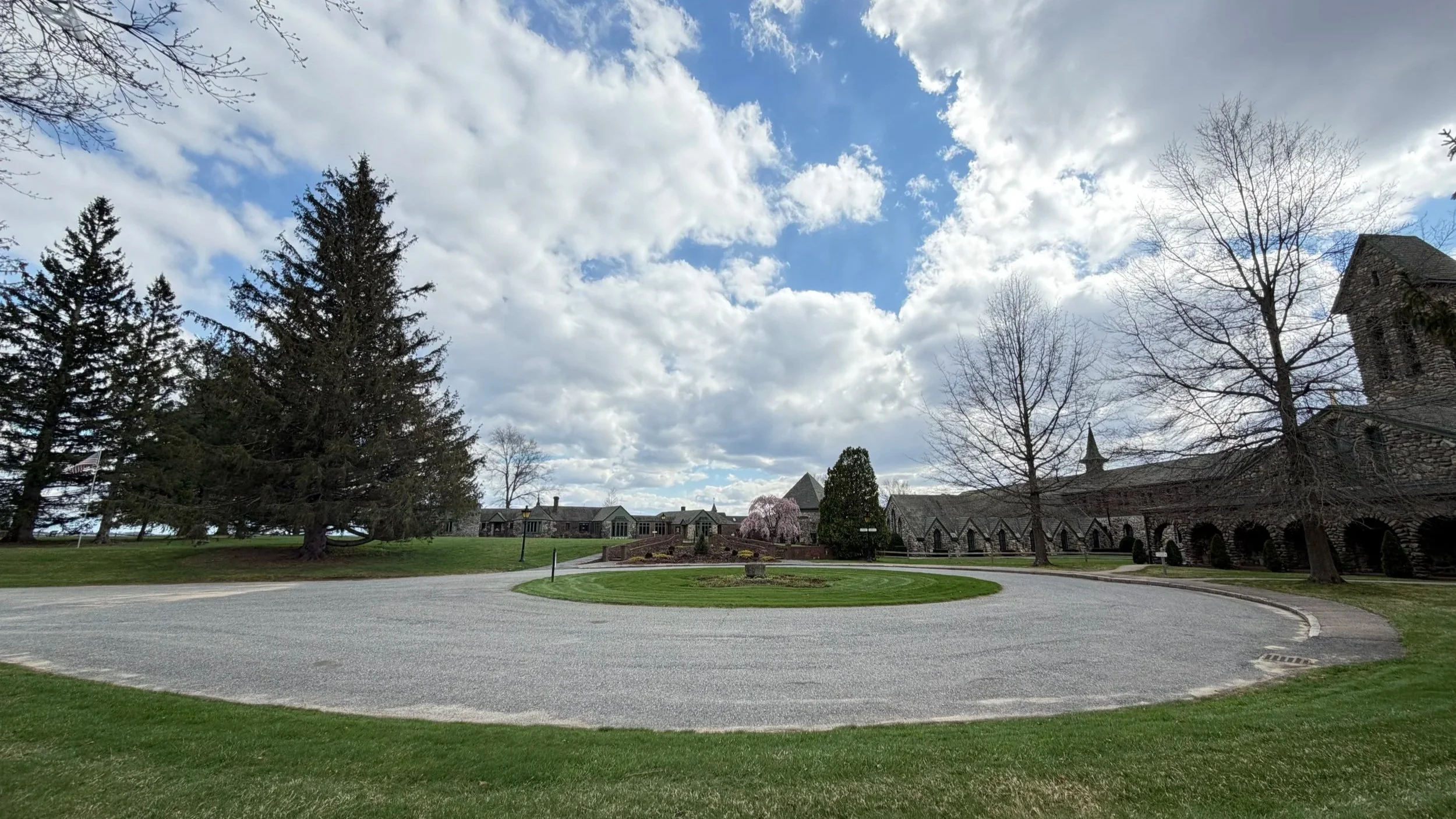
My friend and I were often lost during the services. We did not always know when to stand, when to bow, or what came next. But from the moment we arrived, the place felt sacred. The buildings, the sanctuary, the prayer room, the thick stone walls. Even the silence had weight.
Inside the abbey church, the silence was so complete that I could hear ringing in my own head.
That was my first discovery. My head was louder than the silence.
I came to St. Joseph’s because of Father Thomas Keating.
Keating, one of the central figures in the development of Centering Prayer, had been abbot there in Spencer, Massachusetts. I had known the practice was shaped by Trappist monks, but I had no idea Massachusetts was home to such an influential stream of modern contemplative prayer. I live here. I work here. I lead here. And tucked away in Spencer, forty miles from my house, was a place that had helped recover Christian silent prayer for a generation of seekers.
So I knew I needed to go.
St. Joseph’s is a Trappist monastery. Their daily rhythm runs on the Divine Office, the Liturgy of the Hours, gathering for prayer again and again across the day and night. Vigils. Lauds. Terce. Sext. None. Vespers. Compline. Prayer is not squeezed into the margins of their life. Prayer is the structure of their life. Time itself is interrupted, sanctified, and reordered around the presence of God.
I was nervous going in. Getting up at 3:30 a.m. for Vigils sounded brutal. I normally have a hard time falling asleep, so I figured moving slowly all day, not talking, not exercising, would make things worse.
It did the opposite.
I slept well. Deeply. I woke more easily than expected. I did not miss my phone. I did not miss scrolling. I did not even get bored, which honestly surprised me more than anything else.
The harder part was the separation.
Inside the abbey church, there was a literal physical division between the monks in the choir and the guests seated farther back. Not hostile. Not rejecting. No physical barriers. Just the design of the space, the structure of their life. Even the Catholic priests on retreat stayed back with us.
As a church planter, that felt strange. My instincts are built around welcome. I greet people, ask questions, make connections, and learn stories. So sitting in the back, physically separated, unable to introduce myself, unable to know anyone, felt almost like torture.
Seven priests. A Catholic man. A Protestant friend. Me. I wanted to know where everyone came from, what they were carrying, what had brought them here. But silence kept those doors shut.
Then one day, during what felt like a passing of the peace, the monks turned toward us. Some smiled. Some waved. Small. Quiet. Almost understated. But their faces were kind.
From a distance, their welcome reached us.
I sat with that for a while. We were separated, but not rejected. Held at arm’s length, but not dismissed. Warmth arrived without conversation, without name tags, without coffee hours with donuts. Just a smile across sacred space, and then the silence resumed.
By the second day, I started to understand. I had not come here to be socially welcomed or welcome others in the way I was used to. I had come to enter a different kind of welcome. A welcome into stillness. Into solemnity. Into the prayer of the church that had been going on long before I arrived and would continue long after I left.
There were no sermons.
But there was Scripture. So much Scripture. Chanted, read, prayed, received. And whenever the Trinity was named, the monks bowed. Deeply. Nearly ninety degrees! Father, Son, and Holy Spirit were not words to be passed over. The name of God was honored with the whole body.
I tried to bow with them. Yes, ninety degrees!
My back protested.
I thought, I’m Asian. I should be a professional at this.
Apparently not.
But their posture moved me.
The reverence was not performative. It was embodied. Their bodies had been trained to remember what the rest of us keep forgetting: that the name of God is holy, that Scripture is sacred, and that worship is not primarily about sermons and worship music.
That conviction was not new to me, but at the monastery it landed differently. It moved from something I believed in my mind to something I felt in my body.
The following Sunday, back at my church, we had a baptism, so we shortened the service to an hour. My sermon text was ten verses from Acts. We cut the Old Testament reading, the Psalm, the Gospel, and the Epistle. Completely normal pastoral math. We have done it a hundred times.
But after the monastery, it felt empty. Not wrong. I understand the practical realities. But after days in a community where the Word was not rushed, where the day itself bent around prayer, ten verses felt painfully thin.
I did not come home wanting to become Catholic or wanting to copy monastic liturgy and paste it onto a Protestant church. But I came home aching for more sacred attentiveness. More room for Scripture. More embodied reverence. More prayer that does not need to be explained, marketed, or made useful.
Then there was Communion.
Out of respect for the Catholic understanding of the Eucharist, particularly transubstantiation, I did not participate. I stayed back.
That may have been the hardest part of the whole retreat.
I expected the early mornings to be hard. I expected the silence to be hard. I expected the unfamiliar liturgy to be hard. I did not expect how deeply I would long for the table.
There was something about watching the Eucharist from a distance, already living inside silence, that awakened a hunger in me. I wanted Christ. I wanted the shared meal of grace. Absence made the sacrament feel weightier than participation sometimes does.
And maybe that was its own kind of communion. Not the sacrament itself, but the longing.
It brought me back to my fourteen-year-old self, when I was told I could not participate in Communion because I had not been baptized yet. I already believed in God the Father, Christ the Son, and the Holy Spirit, Three in One. But I was not yet allowed to come to the table.
I remember that ache.
The longing grew tenfold within me. Two years later, at sixteen, I was baptized. It was my choice. No one pushed me. I wanted to follow Christ and come to the table.
That longing stayed with me at the abbey, but it did not stay only in the chapel. As the days passed, I began to see how the monks’ whole life was gathered into prayer.
Even ordinary work seemed to belong to God.
The monks at St. Joseph’s are not escaping work, as some might assume. They live by it. Their history includes Trappist Preserves, which began in 1954 when they made mint jelly from herbs in the abbey garden. That small beginning grew into a line of fruit preserves and jams. For a while, they were also known for Spencer Brewery, the first Trappist brewery in the United States to be certified.
In 2022, after reflection and consultation, they closed the brewery. Brewing was no longer viable for them. So they let it go.
In a world that clings to whatever works or builds a brand, I found that quietly beautiful. The monks discerned, released, and returned to the simplicity of their life. Prayer. Work. Simplicity. Community.
The abbey did not feel like a religious brand trying to impress anyone. It felt steady. Unhurried. Their welcome was warm but not anxious. Hospitable but not performative. Present but not intrusive.
I left on Friday morning. The silence did not leave me.
It has been about two weeks since I came home, and this past week was anything but quiet and slow. Two big events across four days. Plenty of activity, conversation, and movement. But something has shifted. When I sit down now, peace settles more quickly. My soul feels more grounded. My mind feels less scattered.
Ninety hours of silence did something to me.
It did not empty me. It made room. I walked, I prayed, I read, I meditated. And I was amazed by how clearly I could think. I read attentively. I absorbed more. Thoughts went deeper. Some things that usually take a long time to process arrived at resolution almost on their own.
There were still distractions. My mind wandered. Old thoughts surfaced. But without the constant interruption of screens, noise, messages, and the endless pull of everything outside, the distractions had nowhere to hide. I could see them. And once I could see them, they lost most of their power.
Silence does wonders for the brain.
And to the soul.
I went to St. Joseph’s Abbey curious about Thomas Keating and Centering Prayer. I went wanting a deeper silence than the smaller doses I had known. I went wondering what monastic prayer might have to teach a Protestant pastor trying to reimagine spiritual formation for busy, urban, distracted people.
I came home with more than information.
I came home with peace and a renewed hunger for Scripture.
I came home longing for Communion.
I came home wondering what it would look like for our churches to become less hurried, less noisy, less addicted to explanation, and more willing to let silence do its slow work.
Because sometimes the soul does not need one more sermon.
Sometimes it needs stone walls, a bell in the dark, a monk bowing at the name of the Trinity, a room full of untold stories, or a table we long for.
And enough silence to discover that the loudest thing in the room has been our own mind, finally learning how to be still.