What Comes After Camino?
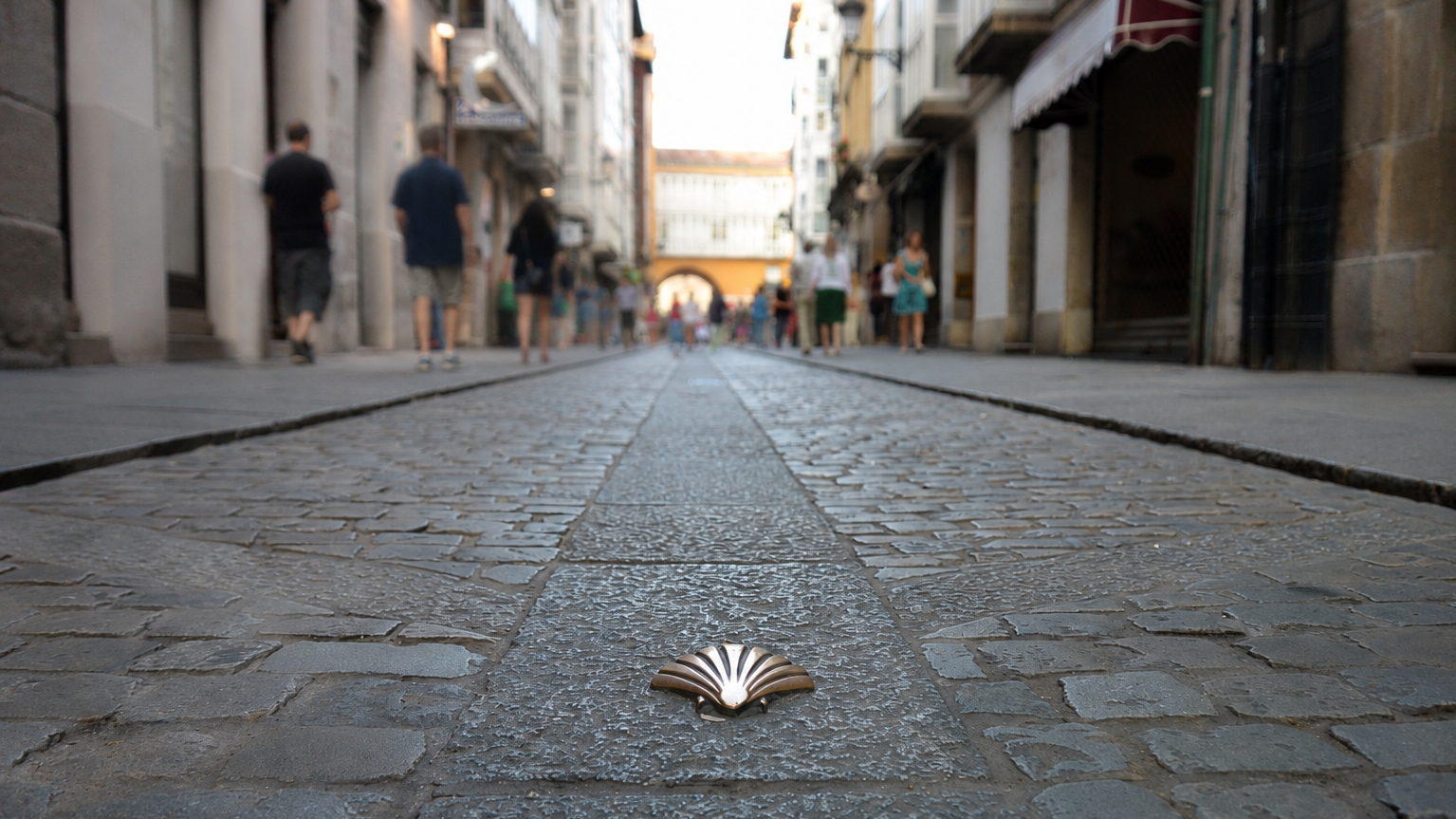
A note before you read: What follows is my reflective and artistic expression of celebrating the journey of our small, beloved micro-community. Several years ago I traveled to Burgos, Spain, a city along the ancient Camino de Santiago, and it was there that I first encountered this storied pilgrimage road and fell in love with its language and imagery. I have not walked the full Camino de Santiago, but the name, the metaphor, and the spirit of pilgrimage captured something true about what we were doing together. So I borrowed it. Our community became Camino, and the pilgrim’s road became the lens through which I have tried to describe our shared journey. If you are familiar with the actual Camino de Santiago, you may recognize the imagery. If you are not, that is perfectly fine. What matters is the story underneath it, which is ours, and it is real.
On August 26, 2022,
Before we knew the road had a name, a few of us gathered like travelers arriving in Spain with curiosity, hope, and backpacks full of questions.
We thought we were beginning something together.
And we were.
But not everyone who arrives in Spain is looking for the Camino de Santiago.
Some come to explore. Some come to rest. Some come because they are curious. Some come because someone invited them. Some stand near the trailhead, look at the long road ahead, feel the weight of the pack, and realize this is not the pilgrimage they are meant to walk.
That was our first beginning.
We called it Woven.
It was beautiful, brief, sincere, and unfinished.
By September 23, 2022, that first gathering came to an end. Not because it failed, but because the road was clarifying itself. Something else was emerging. A smaller group began to sense that we were not only gathering. We were being invited to walk.
So on October 14, 2022, a new journey began.
Not with a grand launch.
Not with a clear map.
Not with a five year plan.
Just pilgrims on the road.
We were leaving a familiar city behind. For some of us, that city was the religious world we had known. A world of certainty, belonging, structure, service, disappointment, longing, and wounds we did not yet know how to name. Some of us loved that city. Some of us had served it. Some of us had been formed by it. Some of us had been hurt inside it.
We did not step onto the road because we hated where we came from.
We stepped onto the road because we needed space to breathe.
We needed room to tell the truth.
We needed to walk slowly enough to hear God again.
Then, on December 18, 2022, the road received its name.
Camino.
A road for wanderers, pilgrims, doubters, believers, seekers, exiles, mystics, tired church people, and those who still loved Jesus but were not always sure what to do with church.
Once the road had a name, people began to find us.
Some came with clear intention. They knew they needed a pilgrimage. They knew they were deconstructing. They knew what they were leaving, even if they did not yet know what they were walking toward.
Others came unsure.
They were not even certain they belonged on the road. They only knew they were tired, restless, curious, lonely, disillusioned, hungry, or quietly hopeful. Some came carrying grief. Some came carrying anger. Some came carrying questions about God, church, family, race, sexuality, justice, prayer, belonging, and identity. Some came saying, “I do not know what I am looking for, but I know I cannot keep walking the way I was walking.”
So we opened a spiritual hostel.
Not a cathedral.
Not a program.
Not an institution.
A hostel.
A place where pilgrims could arrive dusty and honest. A place where no one had to pretend they were further along than they were. A place where stories could be shared around the table, sometimes awkwardly, sometimes beautifully, sometimes with laughter, sometimes with tears.
Over time, around thirty people joined the journey in one way or another.
Some stayed for a night.
Some stayed for a season.
Some stayed long enough to become part of our inner landscape.
Some arrived quietly and left quietly.
Some brought joy. Some brought disruption. Some brought healing. Some brought questions that changed the room. Some brought stories we still carry.
That is the strange gift of pilgrimage.
We do not get to choose everyone we meet on the road. We do not get to control how long they stay. We do not get to decide whether every connection becomes deep or remains brief. We only receive who is given to us, for as long as they are given.
And I, as the host, had the sacred privilege of hearing these stories.
That may be what I cherish most.
I got to sit with people at different points on the road. Some for only a short stretch. Some for years. Some while they were exhausted. Some while they were awakening. Some while they were grieving the church they left behind. Some while they were discovering a new way to pray. Some while they were not sure they could believe anymore. Some while they were beginning to hope again.
I did not only host them.
I was changed by them.
Their stories widened me. Their honesty humbled me. Their courage formed me. Their wounds taught me tenderness. Their questions made me more patient. Their laughter gave me joy. Their presence became part of my own pilgrimage.
Camino was never just something I helped hold.
Camino held me too.
At times, the constant coming and going was exciting. Every new person felt like a new story, a new world, a new mystery of God arriving at the table.
At other times, it was wearying. The road was already uncertain, and when pilgrims kept appearing and disappearing, some of us felt the ache of instability. We longed for something steady. We wondered whether this was a community, a shelter, a movement, a family, a gathering, or simply a temporary camp in the wilderness.
Maybe it was all of those things.
There were nights when stories opened and we felt like we had known each other forever. Different histories, different backgrounds, different wounds, yet somehow the same ache underneath. The same longing for something real. The same desire to encounter God beyond performance, beyond argument, beyond inherited scripts.
There were other nights when connection came slowly. Or not at all.
Some stories were so different from our own that we had to learn to listen without rushing to understand. We had to practice wonder. We had to allow mystery. We had to learn that community is not only formed by similarity. Sometimes it is formed by reverence for difference.
The road taught us that every person is deeper than first impressions can hold.
Every pilgrim is a whole world.
Every person carries hidden weather.
Every story has landscapes we cannot see at first glance.
And so Camino became a place of holy discovery.
We discovered that deconstruction is not simply tearing things down. Sometimes it is grief. Sometimes it is truth-telling. Sometimes it is finally admitting that the old house no longer feels safe. Sometimes it is walking away from a religious structure in order to find the God who was never confined to it in the first place.
We discovered that reconstruction cannot be rushed. You cannot hand a pilgrim blueprints while they are still limping through the desert. You cannot demand a new house from someone who is still grieving the old one. You cannot force arrival when the soul still needs to wander.
We discovered that the wilderness is not empty.
It is honest.
It strips away illusions. It reveals hunger. It exposes fear. It teaches trust. It gives us manna, but usually only enough for the day.
Then, on September 8, 2024, the road stretched in a new direction.
Online Camino began.
By then, some beloved companions had already reached a fork in the road. Their paths turned one way. Ours turned another. Not in failure. Not in betrayal. Simply in the truth of pilgrimage. Sometimes the people who become dear companions are not meant to walk the same road forever.
So we blessed them, even when it hurt.
We stayed connected where we could. Across distance. Across screens. Across changing seasons. The hostel became virtual. The table stretched. We were not always in the same room, but we were still sharing bread in whatever way we could.
Then, on November 5, 2025, Camino continued fully online, and I stepped back from holding it.
That was its own holy marker.
The host had to release the table.
The guide had to remember he was also a pilgrim.
The one who helped hold the space had to listen for his own road.
That too became part of the lesson.
No one owns the Camino.
No one controls the wilderness.
No one gets to keep the road from changing.
Eventually, every shared path begins to diverge. Some pilgrims arrive earlier. Some arrive later. Some arrive somewhere they never expected. Some are not even sure they have arrived, but they know the landscape has changed.
And then came April 22, 2026.
The end of the journey in the wild called Camino.
For a long time, the city was behind us and the wilderness was ahead. We were leaving. Questioning. Unlearning. Lamenting. Wandering. Searching.
But now the wilderness is behind us, and the city stands before us.
Not the same city we left.
And we are not the same people who left it.
We have crossed something.
We may not know exactly where we are, but we know one journey has come to an end.
That is both beautiful and hard.
Some are ready to return. Some are reluctant. Some feel they needed more time in the wild. Some wonder whether they have processed enough, grieved enough, healed enough, questioned enough, rested enough.
But the road does not always ask whether we feel ready.
Sometimes grace simply places a new horizon before us and says, it is time.
So we bless Camino.
We bless the road that held us.
We bless the hostel that gave us shelter.
We bless the stories told in trust.
We bless the awkward beginnings, the late arrivals, the strange conversations, the holy silences, the unexpected friendships, the laughter, the tears, the deep sighs, the unfinished prayers.
We bless those who walked with us for a night.
We bless those who walked with us for years.
We bless those who left before we were ready.
We bless those who stayed longer than we expected.
We bless those who found healing.
We bless those still healing.
We bless those who found language for their pain.
We bless those who found God again in the wilderness.
And now we ask the question every pilgrim must eventually ask.
What comes after Camino?
Maybe what comes next is not another wilderness road. Maybe it is a gentle return. Maybe it is learning how to live again in the city without losing what the desert gave us.
Maybe it is carrying silence into noise. Carrying mystery into structure. Carrying tenderness into responsibility. Carrying freedom into belonging. Carrying honesty into community. Carrying the God we met in the wild back into ordinary streets, jobs, homes, churches, friendships, neighborhoods, and embodied life.
Maybe the next chapter is not about leaving anymore.
Maybe it is about returning differently.
Not returning to the old city as the old self. But entering the new city as people who have been changed by the road.
People who know that faith can survive questions.
People who know that God can be found outside the walls.
People who know that community does not need to be perfect to be sacred.
People who know that stories can become sacraments.
People who know that the wilderness was never the destination.
It was the passage.
So for those whose Camino is complete, we bless you.
May the road rise to meet you in whatever city you now enter. May the dust of the wilderness remain on your shoes as a reminder that God met you there. May you carry the memory with tenderness and not cling to it with fear. May your next endeavor be blessed. May your life become spacious, honest, grounded, and free.
And for those who still desire to walk together, not as wanderers escaping the city, but as pilgrims learning to return to it, perhaps a new chapter is beginning.
Not Camino as it was.
Something after Camino.
A fellowship of return.
A table for gentle reentry.
A hearth in the city.
A quiet commons for reconstructed lives.
A place where the wilderness is honored, but no longer romanticized.
A place where we learn how to live what we discovered.
A place where we do not simply deconstruct the old, but slowly, prayerfully, humbly embody the new.
The first Camino has ended.
The road has done its work.
The wilderness is behind us.
The city is before us.
And God is already there.